

The $4 Billion Question: T. Denny Sanford, Transformational Giving and the Power Behind the Check
T. Denny Sanford was never as nationally recognizable as Warren Buffett, Bill Gates or MacKenzie Scott. Yet his philanthropy placed him in rare company.
The announcement of his passing, on July 18th, was the first time I heard about him, and that prompted me to dig a little deeper into his philanthropy, the source of his wealth and quite honestly wrapping my head around multi billion-dollar philanthropy.
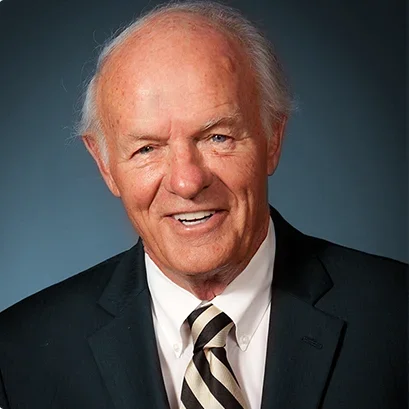
Photo: First Premier Bank
By the end of his life, Sanford had reportedly donated more than $4 billion to healthcare, scientific research, education, children and families, workforce development and the arts. His gifts helped build hospitals, expand medical research and transform regional institutions into organizations with national reach.
But Sanford’s story is about more than generosity.
It is also about the power that comes with extraordinary wealth: the ability to reshape institutions, influence public priorities and attach one person’s name to work sustained by thousands of professionals and community members.
From Banking to Billion-Dollar Giving
Thomas “Denny” Sanford was born in St. Paul, Minnesota, and later became closely associated with Sioux Falls, South Dakota.
He built most of his fortune through First PREMIER Bank and PREMIER Bankcard, which became major providers of credit cards to people with limited, damaged or higher-risk credit histories.
The business was highly profitable—and controversial.
Supporters argued that the company gave consumers who might otherwise be denied credit an opportunity to establish or rebuild their credit. Critics pointed to the high interest rates and fees often associated with subprime credit cards and questioned whether the business placed additional burdens on financially vulnerable customers.
That tension is central to Sanford’s legacy.
His philanthropy created significant public benefit. At the same time, the source of his wealth raises questions that should not disappear simply because the charitable checks were large.
A reported $4 billion legacy
First PREMIER reported that Sanford gave more than $4 billion during his lifetime. Because that total comes from his company rather than a publicly available, independently audited accounting of every donation, it is most accurate to describe the figure as his reported lifetime giving.
Even with that qualification, the scale is extraordinary.
Sanford’s giving supported hospitals, research institutions, universities, arts organizations, workforce initiatives and services for children and families.
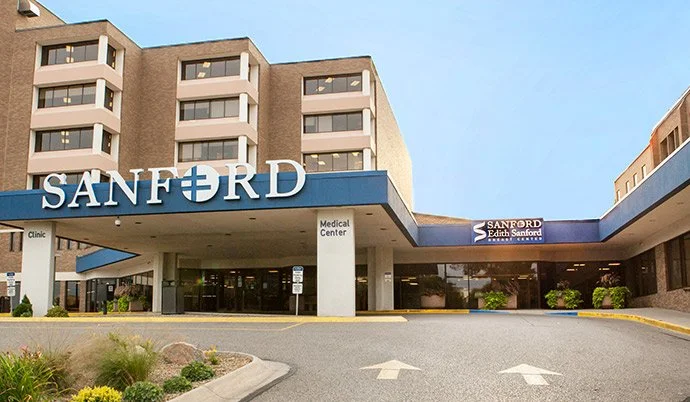
Photo: Sanford Health
He was also a prominent supporter of the giving-while-living philosophy: distributing large portions of his wealth during his lifetime rather than preserving most of it for a foundation to give away after his death.
The gift that changed a health system
Sanford’s most significant philanthropic relationship was with the South Dakota healthcare organization that now bears his name.
In 2007, he made a $400 million gift to what was then Sioux Valley Hospitals and Health System. The organization was renamed Sanford Health, and his support helped expand pediatric care, medical research and healthcare infrastructure.
Over time, Sanford reportedly gave nearly $2 billion to Sanford Health.
Those investments supported rural healthcare, virtual care, graduate medical education, genomics, veterans’ health and medical facilities across the region.
In 2025, he announced another $300 million gift to help establish the Sanford Black Hills Medical Center in Rapid City, South Dakota.
This is what fundraisers mean when they describe a gift as transformational.
It does not simply fund a program.
It changes what an institution believes is possible.
The glamour of naming rights
There is a particular kind of legacy available to major philanthropists.
A donor’s name can be placed on hospitals, research centers, university programs and public-serving institutions. That name may remain visible long after the donor is gone.
Naming gifts can create tremendous value. Nonprofits receive the capital needed to expand facilities, attract talent and pursue ambitious work. Donors receive public recognition and a lasting association with civic progress.
But naming also reveals the power imbalance built into major philanthropy.
An organization may be sustained by nurses, teachers, scientists, nonprofit leaders, volunteers and community members, yet the donor’s name becomes the most visible one attached to the mission.
That does not make naming gifts inherently wrong.
It does make them worthy of examination.
Inside America’s billion-dollar donor class
Sanford’s reported $4 billion in giving places him among a small circle of American philanthropists whose donations are measured in billions rather than millions.
But these donors do not all give in the same way.
Warren Buffett has transferred tens of billions of dollars in Berkshire Hathaway stock to charitable foundations, including the Gates Foundation and foundations connected to his family. His model emphasizes large-scale wealth transfer rather than building a single institution around his own name.
Bill Gates and Melinda French Gates helped build one of the world’s most influential philanthropic institutions. Their giving has shaped global health, vaccines, agriculture, education and economic opportunity.
MacKenzie Scott has challenged traditional donor behavior by making large gifts, many of them unrestricted, to thousands of nonprofits. Her approach gives nonprofit leaders more authority to determine how funding should be used.
Michael Bloomberg has used philanthropy as a tool for public strategy, investing in climate action, public health, education, the arts and city government.
Sanford’s model was different.
His giving was concentrated, highly visible and deeply institutional. He made large investments in healthcare, research and children’s services, often creating long-term relationships with the organizations he supported.
Big gifts should lead to bigger questions
There is no serious argument that billion-dollar philanthropy has failed to create meaningful good.
Major donors have funded hospitals, scholarships, scientific breakthroughs, climate initiatives, community organizations and public-health programs.
But the size of a gift should not end the conversation.
It should begin one.
Who decided how the money would be used?
Did the gift strengthen the organization for the long term?
Was the funding flexible enough to support staff and operations, or was it restricted to a highly visible project?
Did community priorities shape the investment?
And how should the public weigh a donor’s charitable impact against the business practices that created the fortune?
These are not cynical questions.
They are necessary ones.
T. Denny Sanford’s legacy is both impressive and complicated.
His reported $4 billion in giving helped expand healthcare, support scientific research and strengthen institutions serving children and families. His philanthropy demonstrates the extraordinary impact one donor can have when large-scale capital is paired with institutional ambition.
But his story also shows why philanthropy should never be evaluated by the check alone.
The full measure of a donor’s legacy includes the source of the wealth, the power attached to the gift, the communities affected and the systems changed.